

 Login
Login Message


 Home
Home 1987 Lists
 7 Reviews
 Collections
It's by no means, a great film. It is however, a chesstaculary fun over the top movie.
Probably the best part of the film, is William Fichtner as "The Accontant", that and Nicholas Cage's hair.
 |
Agent Kermit D. FonzAdd Agent Kermit D. Fonz as a friendAgent Kermit D. Fonz will be notified and will have to accept this friendship request, to view updates from Agent Kermit D. Fonz and their ratings you must follow them. |
Music
Top rated    |
 My music page My music page Rated 3705 music Rated 3705 music |
Books
Favorite - View all    |
My books page Rated 59 books |
Favorite Authors
Joel Coen, Stephen King, James Wan, Steve James, Wes Anderson, J. R. R. Tolkien, Ethan Coen, Joe Hill, Dean Koontz, Judy Blume, Beverly Cleary, Michael Crichton, Clive Barker, Bill Watterson, Charles M. Schulz, Sandra Boynton
DVDs
Top rated    |
My dvds page Rated 77 dvds |
Movies
Top rated    |
My movies page Rated 5044 movies |
Games
Top rated    |
My games page Rated 10 games |
TV
Favorite - View all    |
My tv page Rated 932 tv |
About me
What you should know about me:I own a pet cat, love cheesy action and horror movies, occasionally watch hockey, love listening to pretty any kind of music, hard rock, classic rock and pop, old school rap, 80's and 90's music, heavy metal, you name it, and I am also from Canada.
Also known as Jamie M.
About voting:
I'll try to get to voting as many lists, as humanly possible, in my spare time.
Since there's alot of awesome lists and pictures, out there I'll try to vote as many times as I can.
About lists that are in work: It will be huge undertaking, so some will take longer than others to finish off.
About the ratings:
***** Great or awesome
****. Good
***. Decent or Ok
**. Meh
*. It stinks!
No Stars. You get the idea.
Occupation: Grocery Store Clerk
Recent reviews
Drive Angry review
 Posted : 11 years, 7 months ago on 3 April 2015 03:13
(A review of Drive Angry)
Posted : 11 years, 7 months ago on 3 April 2015 03:13
(A review of Drive Angry) 1 comments, Reply to this entry
The Interview review
 Posted : 11 years, 10 months ago on 25 December 2014 07:05
(A review of The Interview)
Posted : 11 years, 10 months ago on 25 December 2014 07:05
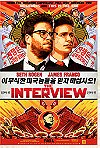
(A review of The Interview)Having just seen The Interview, I would have to say it was pretty great film. Granted, some of the jokes where hit and miss, but it was still not that bad of a movie.
0 comments, Reply to this entry
Jack and Jill review
 Posted : 14 years, 4 months ago on 24 June 2012 03:55
(A review of Jack and Jill)
Posted : 14 years, 4 months ago on 24 June 2012 03:55
(A review of Jack and Jill)I would say that this is a bottom of the barrel comedy, but I would be insulting both barrels and the bottom of barrels.
2 comments, Reply to this entry
Whitney review
 Posted : 14 years, 11 months ago on 15 November 2011 05:23
(A review of Whitney)
Posted : 14 years, 11 months ago on 15 November 2011 05:23
(A review of Whitney)Tried watching this show a couple of times, but gave up on it after a few episodes. The fact that Whitney, is still on the air and that Community could be placed on an indefinite hiatus, and possibly cancelled by the "evil peacock network", says a lot about the "evil peacock network"'s priorities.
0 comments, Reply to this entry
Season of the Witch review
 Posted : 15 years ago on 29 October 2011 02:04
(A review of Season of the Witch)
Posted : 15 years ago on 29 October 2011 02:04
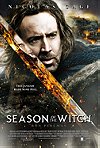
(A review of Season of the Witch)If your ever wondered, what The Name of The Rose, Monty Python and The Holy Grail, and The Devils, would be like featuring stilled dialogue, cheesy CGI, a predictable plot you can see coming from a mile away, and Nicholas Cage, then this film is for you!
Cage, plays a knight quested to deliver a young women, believed to be the cause of the Bubonic Plague, and of being a witch.
Also, the wolves in the film are of the CGI variety, but the unintentional laughs are very, very real.
Lovers of bad cinema, this is film is just for you!
Cage, plays a knight quested to deliver a young women, believed to be the cause of the Bubonic Plague, and of being a witch.
Also, the wolves in the film are of the CGI variety, but the unintentional laughs are very, very real.
Lovers of bad cinema, this is film is just for you!
0 comments, Reply to this entry
Vanishing On 7th Street review
 Posted : 15 years, 1 month ago on 24 September 2011 05:08
(A review of Vanishing On 7th Street)
Posted : 15 years, 1 month ago on 24 September 2011 05:08
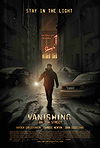
(A review of Vanishing On 7th Street)It was an okay film, with an okay premise, but it fell apart at the very, very end.
1 comments, Reply to this entry
Dragonball Evolution review
 Posted : 15 years, 1 month ago on 18 September 2011 10:31
(A review of Dragonball Evolution)
Posted : 15 years, 1 month ago on 18 September 2011 10:31
(A review of Dragonball Evolution)Best comedy, ever!
I know it isn't but from the very beginning, I found the film very much unintentionally hilarious.
Yes, I know that the TV series, had their moments of humor, but the live action takes it to the next level.
A direct comparison, would be Super Mario Bros and Double Dragon, both awesomely bad, and both worth checking out if you like really horribly awful, but yet entertainingly horribly bad movies films, this film definitely belongs way up there with them.
I know it isn't but from the very beginning, I found the film very much unintentionally hilarious.
Yes, I know that the TV series, had their moments of humor, but the live action takes it to the next level.
A direct comparison, would be Super Mario Bros and Double Dragon, both awesomely bad, and both worth checking out if you like really horribly awful, but yet entertainingly horribly bad movies films, this film definitely belongs way up there with them.
0 comments, Reply to this entry
Lists
 103 votes
Gone, but not forgotten
(2184 items)Person list by Agent Kermit D. Fonz Published 1 year, 11 months ago
14 comments 5 votes
Why the Bomb?: Films of 1980s: 1981
(51 items)Movie list by Agent Kermit D. Fonz Published 1 month, 3 weeks ago
 3 votes
Why the Box Office?: Films of 1980s: 1981
(48 items)Movie list by Agent Kermit D. Fonz Published 6 days, 8 hours ago
 4 votes
Why the Box Office?: Films of 1980s: 1980
(40 items)Movie list by Agent Kermit D. Fonz Published 1 week, 1 day ago
 |
My feed


Agent Kermit D. Fonz added 1 item to Why the Box Office?: Films of 1980s: 1981 list
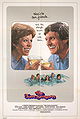
 The Four Seasons released in 191 is a hit relationship chronicle directed by Alan Alda and starring Alan Alda and Carol Burnett.
Praised by Siskel & Ebert with "Two Thumbs Up!", the film follows three middle-aged couples whose seasonal vacations are thrown into hilarious turmoil by a sudden divorce, testing the true strength of their lifelong friendships.
Box Office Hit: Alan Alda turned a $6.5 million budget into a $50.4 million success by targeting mature audiences.
Critical Acclaim: Siskel and Ebert gave it "Two Thumbs Up," praising its authentic alternative to Hollywood formulas.
Mature Themes: Celebrated for handling middle-aged friendship, aging, and marital erosion with unironic dignity.
Script Flaw: Critics felt the final act's sudden physical winter slapstick temporarily hurt its grounded realism.
Modern Adaptation: Tina Fey turned it into a hit number-one Netflix series starring Steve Carell and Colman Domingo
The Four Seasons released in 191 is a hit relationship chronicle directed by Alan Alda and starring Alan Alda and Carol Burnett.
Praised by Siskel & Ebert with "Two Thumbs Up!", the film follows three middle-aged couples whose seasonal vacations are thrown into hilarious turmoil by a sudden divorce, testing the true strength of their lifelong friendships.
Box Office Hit: Alan Alda turned a $6.5 million budget into a $50.4 million success by targeting mature audiences.
Critical Acclaim: Siskel and Ebert gave it "Two Thumbs Up," praising its authentic alternative to Hollywood formulas.
Mature Themes: Celebrated for handling middle-aged friendship, aging, and marital erosion with unironic dignity.
Script Flaw: Critics felt the final act's sudden physical winter slapstick temporarily hurt its grounded realism.
Modern Adaptation: Tina Fey turned it into a hit number-one Netflix series starring Steve Carell and Colman Domingo1 day, 5 hours ago



Agent Kermit D. Fonz added 1 item to Why the Box Office?: Films of 1980s: 1981 list
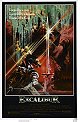
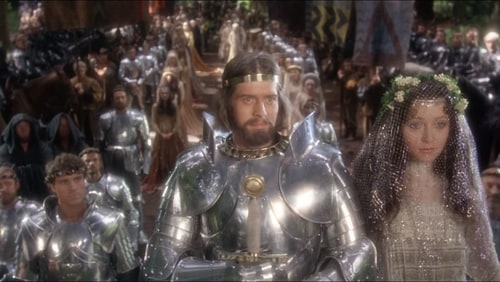 “Forged by a God, found by a King” By the Dragon's power, I, Merlin, summon you to Boorman’s 1981 epic Excalibur
Based on Le Morte d'Arthur with a glorious, operatic score of Orff and Wagner to witness Arthur's journey from the stone to Camelot and his war against Morgana, starring Nigel Terry, Helen Mirren, and myself, alongside future legends Liam Neeson, Patrick Stewart, and Gabriel Byrne."
The Wealth of the Realm: Boorman turned $11M into $34.9M with an uncompromised, R-rated Irish epic starring cheap, unknown future icons.
My Towering Shadow: Our unironic gravity crushed future reboots, leaving them to drown in hollow realism, cheap TV clones, or frantic MTV gimmicks.
The Fantasy Evolution: We catalyzed a massive genre cycle: driving the 80s boom, weathering the 90s TV desert, and inspiring Lord of the Rings and Game of Thrones.
Beyond the Fatigue: To survive audience exhaustion, future projects must ditch tired origins and corporate PG-13 formulas to avoid a "famine for the mind."
The Paradox of Success: We proved the myth's immense profitability, but our primal violence and thunderous music set a towering R-rated standard modern studios fear to replicate.
“Forged by a God, found by a King” By the Dragon's power, I, Merlin, summon you to Boorman’s 1981 epic Excalibur
Based on Le Morte d'Arthur with a glorious, operatic score of Orff and Wagner to witness Arthur's journey from the stone to Camelot and his war against Morgana, starring Nigel Terry, Helen Mirren, and myself, alongside future legends Liam Neeson, Patrick Stewart, and Gabriel Byrne."
The Wealth of the Realm: Boorman turned $11M into $34.9M with an uncompromised, R-rated Irish epic starring cheap, unknown future icons.
My Towering Shadow: Our unironic gravity crushed future reboots, leaving them to drown in hollow realism, cheap TV clones, or frantic MTV gimmicks.
The Fantasy Evolution: We catalyzed a massive genre cycle: driving the 80s boom, weathering the 90s TV desert, and inspiring Lord of the Rings and Game of Thrones.
Beyond the Fatigue: To survive audience exhaustion, future projects must ditch tired origins and corporate PG-13 formulas to avoid a "famine for the mind."
The Paradox of Success: We proved the myth's immense profitability, but our primal violence and thunderous music set a towering R-rated standard modern studios fear to replicate.1 day, 7 hours ago


Agent Kermit D. Fonz added 3 items to Why the Box Office?: Films of 1980s: 1981 list

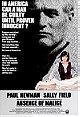
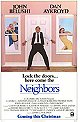
2 days, 1 hour ago
Agent Kermit D. Fonz added 2 items to Why the Box Office?: Films of 1980s: 1981 list
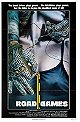
2 days, 22 hours ago
Agent Kermit D. Fonz added 1 item to Why the Box Office?: Films of 1980s: 1981 list
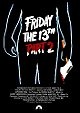
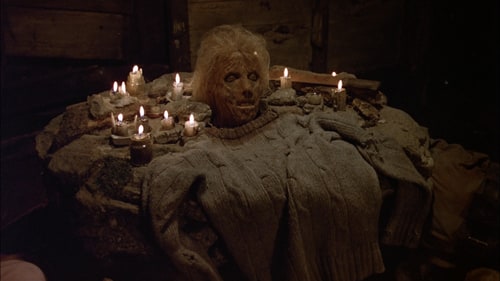 Released in 1981 and directed by Steve Miner, the cynical cash grab
Friday the 13th Part 2 is a braindead insult to human intelligence that trades suspense for a loop of disposable victims, led by female lead Amy Steel slaughtered by villain Jason Voorhees, played by male actors Warrington Gillette and Steve Daskawisz in a ridiculous burlap sack.
Despite the hate, it grossed $21.7 million against a $1.25 million budget by riding the 1981 slasher boom.
Why it Won: Low overhead and a huge $6.43 million opening weekend protected it from dropping ticket sales.
The Audience Experience: 1981 crowds treated it like a rowdy party, though Fangoria readers initially voted it the year's worst movie due to plot holes. Today, it is a cult classic.
The Backlash: Censors cut 48 seconds of gore to avoid an X rating, while a parental moral panic over sex and violence backfired, drawing in even more teenagers.
The Critical Hate: Top critics completely trashed it, with Siskel & Ebert calling it a "reprehensible sleaze pit" and Leonard Maltin rating it a "BOMB."
Released in 1981 and directed by Steve Miner, the cynical cash grab
Friday the 13th Part 2 is a braindead insult to human intelligence that trades suspense for a loop of disposable victims, led by female lead Amy Steel slaughtered by villain Jason Voorhees, played by male actors Warrington Gillette and Steve Daskawisz in a ridiculous burlap sack.
Despite the hate, it grossed $21.7 million against a $1.25 million budget by riding the 1981 slasher boom.
Why it Won: Low overhead and a huge $6.43 million opening weekend protected it from dropping ticket sales.
The Audience Experience: 1981 crowds treated it like a rowdy party, though Fangoria readers initially voted it the year's worst movie due to plot holes. Today, it is a cult classic.
The Backlash: Censors cut 48 seconds of gore to avoid an X rating, while a parental moral panic over sex and violence backfired, drawing in even more teenagers.
The Critical Hate: Top critics completely trashed it, with Siskel & Ebert calling it a "reprehensible sleaze pit" and Leonard Maltin rating it a "BOMB."2 days, 23 hours ago




Agent Kermit D. Fonz added 2 items to Why The Box Office?: Films of 1980s: 1982 list
6 days, 6 hours ago
Agent Kermit D. Fonz added 48 items to Why the Box Office?: Films of 1980s: 1981 list

6 days, 8 hours ago
Agent Kermit D. Fonz posted a list
 Why the Box Office?: Films of 1980s: 1981 (48 movies items)
6 days, 8 hours ago
Agent Kermit D. Fonz added 1 item to Why the Bomb?: Films of 1980s: 1980 list

 Written, directed by, and starring Woody Allen as a disillusioned filmmaker alongside Charlotte Rampling, Jessica Harper, Marie-Christine Barrault, and Tony Roberts, the 1980 film
Stardust Memories—the follow-up to Manhattan—follows a director confronting demanding fans, past loves, and existential dread during a retrospective of his work.
Stardust Memories Failure, Critics, & Legacy
The Failure: Audiences and critics rejected the black-and-white film as a pretentious, hostile clone of Fellini's 8½. Expecting another Annie Hall, viewers felt insulted by its grotesque portrayal of fans, causing it to bomb at the box office ($10.3M gross on a $10M budget).
The Critics: Roger Ebert and Gene Siskel dismissed it as meaningless "bitching and moaning" from a filmmaker out of creative gas. Pauline Kael accused Allen of mocking his audience, while Vincent Canby stood alone in praising the film as "marvelous" and "breathtaking."
The Legacy: Later re-evaluated as a brilliant homage, the film features the silent debut of Sharon Stoneand remains one of Woody Allen's personal favorites among his own works.
Written, directed by, and starring Woody Allen as a disillusioned filmmaker alongside Charlotte Rampling, Jessica Harper, Marie-Christine Barrault, and Tony Roberts, the 1980 film
Stardust Memories—the follow-up to Manhattan—follows a director confronting demanding fans, past loves, and existential dread during a retrospective of his work.
Stardust Memories Failure, Critics, & Legacy
The Failure: Audiences and critics rejected the black-and-white film as a pretentious, hostile clone of Fellini's 8½. Expecting another Annie Hall, viewers felt insulted by its grotesque portrayal of fans, causing it to bomb at the box office ($10.3M gross on a $10M budget).
The Critics: Roger Ebert and Gene Siskel dismissed it as meaningless "bitching and moaning" from a filmmaker out of creative gas. Pauline Kael accused Allen of mocking his audience, while Vincent Canby stood alone in praising the film as "marvelous" and "breathtaking."
The Legacy: Later re-evaluated as a brilliant homage, the film features the silent debut of Sharon Stoneand remains one of Woody Allen's personal favorites among his own works.6 days, 22 hours ago
Agent Kermit D. Fonz added 1 item to Why the Box Office?: Films of 1980s: 1983 list
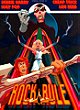
 Clive A. Smith’s 1983 Canadian animated feature Rock & Rule follows a mutant band—featuring Omar (Paul Le Mat/Greg Salata, sung by Robin Zander), Dizzy (Dan Hennessey), and Stretch/Zip (Greg Duffell
They have to rescue Angel (Susan Roman/Debbie Harry) from evil rocker Mok Swagger (Don Francks/Lou Reed) before he summons a demon, tracking its story through three soundtrack hooks: The Beauty (Debbie Harry), The Beast (Lou Reed, Iggy Pop), and The Beat (Cheap Trick, Earth, Wind & Fire).
Box Office & Panic : Heavy Metal ($20.1M gross) won while Rock & Rule ($30.3K gross) bombed due to studio suppression; both hit Satanic Panic backlash over occult themes.
CBC & Cult Legacy: Canada's CBC broadcasted the original cut in 1985, building a late-night fanbase that kept the film alive through bootleg VHS trading.
Death of Adult 2D: Financial and censorship blocks killed big-budget theatrical adult 2D animation, driving the genre onto late-night TV networks like Adult Swim.
Canadian Pivot: The massive deficit nearly bankrupted Nelvana, forcing Canadian studios to abandon edgy art pieces for safe children's hits like The Care Bears Movie.
CGI Foundation: It pioneered blending hand-drawn cells with computer-generated imagery (CGI), launching Canada as a global visual effects (VFX) powerhouse.
Clive A. Smith’s 1983 Canadian animated feature Rock & Rule follows a mutant band—featuring Omar (Paul Le Mat/Greg Salata, sung by Robin Zander), Dizzy (Dan Hennessey), and Stretch/Zip (Greg Duffell
They have to rescue Angel (Susan Roman/Debbie Harry) from evil rocker Mok Swagger (Don Francks/Lou Reed) before he summons a demon, tracking its story through three soundtrack hooks: The Beauty (Debbie Harry), The Beast (Lou Reed, Iggy Pop), and The Beat (Cheap Trick, Earth, Wind & Fire).
Box Office & Panic : Heavy Metal ($20.1M gross) won while Rock & Rule ($30.3K gross) bombed due to studio suppression; both hit Satanic Panic backlash over occult themes.
CBC & Cult Legacy: Canada's CBC broadcasted the original cut in 1985, building a late-night fanbase that kept the film alive through bootleg VHS trading.
Death of Adult 2D: Financial and censorship blocks killed big-budget theatrical adult 2D animation, driving the genre onto late-night TV networks like Adult Swim.
Canadian Pivot: The massive deficit nearly bankrupted Nelvana, forcing Canadian studios to abandon edgy art pieces for safe children's hits like The Care Bears Movie.
CGI Foundation: It pioneered blending hand-drawn cells with computer-generated imagery (CGI), launching Canada as a global visual effects (VFX) powerhouse.1 week ago
Agent Kermit D. Fonz added 1 item to Why the Box Office?: Films of 1980s: 1980 list
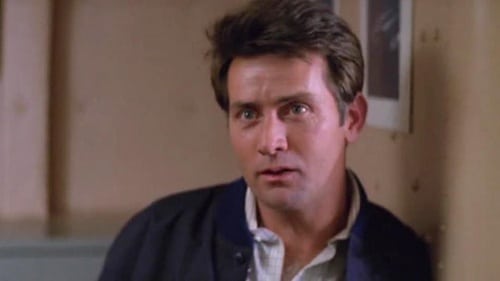 In the 1980 sci-fi thriller The Final Countdown, directed by Don Taylor, the modern nuclear-powered aircraft carrier USS Nimitz is swallowed by a mysterious storm and propelled back through time to December 6, 1941 the eve of the Pearl Harbor attack.
Starring Kirk Douglas and Martin Sheen, this gripping alternate-history adventure forces a modern crew to decide whether to unleash the devastating firepower of supersonic F-14 Tomcats and alter the course of World War II forever.
Box Office: A moderate success that grossed $56.65 million worldwide and secured a lasting cult following.
The Critique: Roger Ebert gave it 2/4 stars, joining critics who panned the slow pacing but praised the spectacular, authentic F-14 Tomcat aviation footage.
Audience Verdict: Highly favored by viewers for its Kirk Douglas performance and alternate-history premise.
In the 1980 sci-fi thriller The Final Countdown, directed by Don Taylor, the modern nuclear-powered aircraft carrier USS Nimitz is swallowed by a mysterious storm and propelled back through time to December 6, 1941 the eve of the Pearl Harbor attack.
Starring Kirk Douglas and Martin Sheen, this gripping alternate-history adventure forces a modern crew to decide whether to unleash the devastating firepower of supersonic F-14 Tomcats and alter the course of World War II forever.
Box Office: A moderate success that grossed $56.65 million worldwide and secured a lasting cult following.
The Critique: Roger Ebert gave it 2/4 stars, joining critics who panned the slow pacing but praised the spectacular, authentic F-14 Tomcat aviation footage.
Audience Verdict: Highly favored by viewers for its Kirk Douglas performance and alternate-history premise.1 week ago


Agent Kermit D. Fonz added 1 item to Why the Box Office?: Films of 1980s: 1980 list
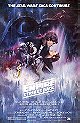
 The Empire Strikes Back, is the follow up to Star Wars and in this 1980 classic directed by Irvin Kershner, from a story by George Lucas and screenplay by Leigh Brackett & Lawrence Kasdan.
The Rebels flee Hoth as Han Solo (Harrison Ford), Princess Leia (Carrie Fisher), Lando Calrissian (Billy Dee Williams), Chewbacca (Peter Mayhew), C-3PO (Anthony Daniels), and R2-D2 (Kenny Baker) evade the ruthless Darth Vader (David Prowse / James Earl Jones), with the original trilogy concluded with The Return of the Jedi.
Meanwhile, Luke Skywalker (Mark Hamill) trains with Jedi Master Yoda (Frank Oz) on Dagobah, walking directly into a dark trap and a shocking family revelation.
The Financial Force: Grossed $538–$550M worldwide on a $30.5M budget, holding the North American number-one spot for eight weeks.
The Backlash: Early 1980 audiences were unsettled by the dark cliffhanger, while critics panned it as a formless, special-effects cash-grab.
The Twist: The shocking Darth Vader fatherhood reveal stunned moviegoers, leaving many convinced it was an Imperial lie.
The Fan Favorites: Audiences universally adored Yoda’s puppet wisdom, the electric Han and Leiaromance, and the mind-blowing Hoth battle effects.
The Special Edition Shift: The 1997 Special Edition added enhanced digital effects, but modern fans criticize alterations like the added Vader shuttle scene for disrupting the 1980 film's pacing.
The Empire Strikes Back, is the follow up to Star Wars and in this 1980 classic directed by Irvin Kershner, from a story by George Lucas and screenplay by Leigh Brackett & Lawrence Kasdan.
The Rebels flee Hoth as Han Solo (Harrison Ford), Princess Leia (Carrie Fisher), Lando Calrissian (Billy Dee Williams), Chewbacca (Peter Mayhew), C-3PO (Anthony Daniels), and R2-D2 (Kenny Baker) evade the ruthless Darth Vader (David Prowse / James Earl Jones), with the original trilogy concluded with The Return of the Jedi.
Meanwhile, Luke Skywalker (Mark Hamill) trains with Jedi Master Yoda (Frank Oz) on Dagobah, walking directly into a dark trap and a shocking family revelation.
The Financial Force: Grossed $538–$550M worldwide on a $30.5M budget, holding the North American number-one spot for eight weeks.
The Backlash: Early 1980 audiences were unsettled by the dark cliffhanger, while critics panned it as a formless, special-effects cash-grab.
The Twist: The shocking Darth Vader fatherhood reveal stunned moviegoers, leaving many convinced it was an Imperial lie.
The Fan Favorites: Audiences universally adored Yoda’s puppet wisdom, the electric Han and Leiaromance, and the mind-blowing Hoth battle effects.
The Special Edition Shift: The 1997 Special Edition added enhanced digital effects, but modern fans criticize alterations like the added Vader shuttle scene for disrupting the 1980 film's pacing.1 week ago
Pictures

Collection stats
| Watched | Want to watch | |
 Movies Movies |
5012 | 71 |
 TV TV |
935 | 3 |
| Owned | Wanted | Used | |
 DVDs DVDs |
1600 | 46 | |
 Books Books |
16 | 34 | 58 |
 Music Music |
136 | 464 | 3747 |
 Games Games |
3 | 7 |
Recently added


Agent Kermit D. Fonz has 266 friends

50 points

744 points
46173 points

78455 points

70 points

387524 points

46454 points

45277 points

10685 points

940566 points

80 points

53 points
View all of Agent Kermit D. Fonz's friends
www.listal.com/list/deutschland-liegt-im-trend
and one of the things I miss about living in the Pennsylvania mountains, the color explosion in the fall, so:
www.listal.com/list/orange-you-glad-you-looked-trekmedic
As always, thanks for all the votes and comments! Your continued support is always appreciated!!
www.listal.com/list/ive-seen-pose-144
As always, thanks for all the votes and comments! Your continued support is always appreciated!!
www.listal.com/list/moistureproof
And be careful who you meet at the beach or go for a swim,...
www.listal.com/list/seduced-song-siren
As always, thanks for all the votes and comments! Your continued support is always appreciated!!
www.listal.com/list/1968-epic-year-movies
As always, thanks for all the votes and comments! Your continued support is always appreciated!!
www.listal.com/list/tpring-woman-broke-spocks-heart
As always, thanks for all the votes and comments! Your continued support is always appreciated!! Live long and prosper!
www.listal.com/list/ask-trekmedics-2026-most-desirable
As always, thanks for all the votes and comments! Your continued support for this and my other polls is always appreciated!!
www.listal.com/list/the-tao-of-shay-mitchell
www.listal.com/list/tao-christen-harper
As always, thanks for all the votes and comments! Your continued support is always appreciated!!
www.listal.com/list/school-spirits
As always, thanks for all the votes and comments! Your continued support is always appreciated!!
www.listal.com/list/lookalikes-part-iii
www.listal.com/list/lookalikes-part-vi
As always, thanks for all the votes and comments! Your continued participation in these and all of my polls is always appreciated!!